

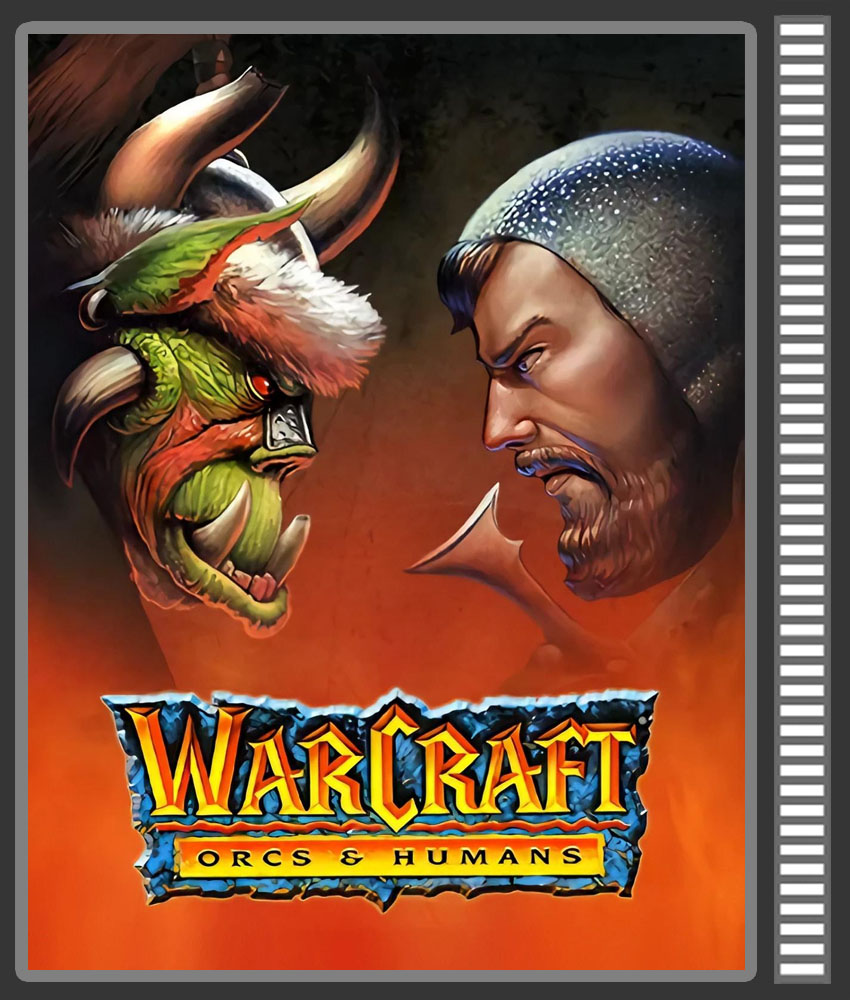
Warcraft
1990's Era Game
Class of 2020 Inductee
Warcraft is a franchise of video games, novels, and other media created by Blizzard Entertainment. The series is made up of six core games: Warcraft: Orcs & Humans, Warcraft II: Tides of Darkness, Warcraft III: Reign of Chaos, World of Warcraft, Hearthstone, and Warcraft Rumble.
The first three of these core games are in the real-time strategy genre, where opposing players command virtual armies in battle against each other or a computer-controlled enemy.
Warcraft: Orcs & Humans is a real-time strategy game (RTS) developed and published by Blizzard Entertainment.
Although Warcraft: Orcs & Humans is not the first RTS game to have offered multiplayer gameplay, it persuaded a wider audience that multiplayer capabilities were essential for future RTS games. The game introduced innovations in its mission design and gameplay elements, which were adopted by other RTS developers.
Warcraft games emphasize skillful management of relatively small forces, and they maintain characters and storylines within a cohesive fictional universe. Sales were fairly high, reviewers were mostly impressed, and the game won three awards and was a finalist for three others. The game’s sequel, Warcraft II: Tides of Darkness, became the main rival to the Command & Conquer series by Westwood Studios. This competition fostered an “RTS boom” in the mid– to late 1990s.
Warcraft II: Tides of Darkness is a fantasy real-time strategy (RTS) computer game developed by Blizzard Entertainment.
A sequel to Warcraft: Orcs & Humans, the game was met with positive reviews and won most of the major PC gaming awards in 1996. In 1996, Blizzard released an expansion pack, Warcraft II: Beyond the Dark Portal.
In Warcraft II, as in many RTS games, players collect resources to produce buildings and units to defeat an opponent in combat. Players gain access to more advanced units upon construction of tech buildings and research. The majority of the display screen shows the part of the territory on which the player is currently operating, and, using the small mini-map, the player can select another location to view and operate on. The fog of war completely hides all territory (appears black) which the player has not explored: terrain that has been explored is always visible in gray tones, but enemy units remain visible only so long as they stay within a friendly unit’s visual radius. Buildings remain displayed as the player last saw them, and do not register unobserved changes such as being built, damaged, or repaired, etc.
Warcraft II was a commercial hit, with global sales above 3 million units by 2001; roughly two-thirds were sold in the United States. The game strongly influenced the company’s next successful RTS, the futuristic StarCraft (1998) in gameplay, and in attention to personality and storyline.
Warcraft III: Reign of Chaos is a high fantasy real-time strategy computer video game developed and published by Blizzard Entertainment released in July 2002. It is the second sequel to Warcraft: Orcs & Humans, after Warcraft II: Tides of Darkness, the third game set in the Warcraft fictional universe, and the first to be rendered in three dimensions. An expansion pack, The Frozen Throne, was released in July 2003. Warcraft III is set several years after the events of Warcraft II, and tells the story of the Burning Legion’s attempt to conquer the fictional world of Azeroth with the help of an army of the Undead known as the Scourge, led by the fallen paladin Arthas Menethil. It chronicles the combined efforts of the Human Alliance, Orcish Horde, and Night Elves to stop them before they can corrupt the World Tree.
In the game, as in many real-time strategy (RTS) games, players collect resources, train individual units and heroes, and build bases in order to achieve various goals (in single-player mode), or to defeat the enemy player. Four playable factions can be chosen from: Humans, Orcs, (both of which appeared in the previous games) and two new factions: the Night Elves and the Undead. Warcraft III single-player campaign is laid out similarly to that of StarCraft, and is told through the races in a progressive manner. Players can also play matches against the computer, or against others—using local area networking (LAN) or Blizzard’s Battle.net gaming platform.
The game received acclaim from critics, who praised the game’s presentation and multiplayer features. It is considered an influential example of RTS video games and one of the greatest video games ever made. Warcraft III was a commercial success, shipping 4.4 million copies to retail stores, selling over a million within a month. Video game modifications created with the World Editor, such as Defence of the Ancients, led to lasting changes and inspired many future games.
Wikipedia Links:
Warcraft:
https://en.wikipedia.org/wiki/Warcraft
Warcraft: Orcs & Humans:
https://en.wikipedia.org/wiki/Warcraft:_Orcs_%26_Humans
Warcraft II: Tides of Darkness:
https://en.wikipedia.org/wiki/Warcraft_II:_Tides_of_Darkness
Warcraft III: Reign of Chaos:
J Allen Brack: IVGHOF 2020 – “1990’s era game” – World of Warcraft: